Showing posts with label John Franks. Show all posts

Jul 7, 2010

WHAT'S IN A NAME?

The recent running of the Queen's Plate brought to mind my first appearance as a commentator for the Canadian Broadcasting Corporation (CBC) on that nation's richest and most coveted event.

On that occasion the royal family was represented by the Queen Mother. The TV team was briefed on protocol should we be spoken to by the Queen Mother.

The producer assumed that I was a Canadian citizen. She was surprised to learn that I was an American in Canada that allowed me to work. I told her that I was not entirely comfortable with the bowing and curtsying that Canadians love to shower on what are called "The Royals'.

I decided to behave myself, figuring the odds were pretty high that she would wish to come and speak to me in Woodbine's leafy walking ring. During a two-minute commercial break I began to sweat as the Queen Mother headed in my direction.

Just in time she stopped to chat with jockey Ken Skinner who had the mount on longshot Market Control for Kinghaven Farm. "I'm going to back your horse," she told Skinner and ambled off to watch him win at boxcars.

This year it was the reigning monarch, Queen Elizabeth II who attended and received vigorous applause from her subjects. Another head of state that I encountered in a happy winner's circle was Sheik Mohammed bin Rashid al Maktoum. He had just won the Irish Derby with the great filly Balanchine.He was known around the world as simply Sheik Mohammed who can play the game in blue jeans and a T-shirt in Kentucky or a morning suit and top hat at Royal Ascot.

As I exited the Curragh I noticed a tall woman, regal in bearing, and greeted her as a fellow American-Mrs. Jean Kennedy Smith, the US ambassador to Ireland and sister to President John F. Kennedy. I couldn't help but think that high station in life doesn't grant immunity from life's woes.
The Aga Khan (make that H.H. Aga Khan as in His Highness) races with great success wherever he goes but he keeps a low profile when when he wins a big race. His breeding operation is second to none and I would love to talk breeding patterns with him. But I'm still not sure about this HH business.

The late Joe Taylor once drove me through a field of about 50 mares owned by the Aga Khan, boarded at Taylor Made farm, most of them grey as I remember.

On this side of the Atlantic, I was questioned from time to time why I addressed my main client, John Franks, simply as John while most called him Mr. Franks. I said that I was 47-years-old when we met, hardly a novice at this game and that we had terrific success right from the start. There were camp followers aplenty around him who adopted an obsequious demeanor with an eye on his pocket book more than proper etiquette.

And then there was the ecumenical duo of Prince Khalid of Juddmonte and Bobby Frankel. "Bobby called him Prince Khalid" said Juddmonte manager Garrett O'Rourke. "But not very often. They spoke about twice a year."


Jul 27, 2009

PALSY WALSY

Sharp Cat 
In Neon


Sharp Cat was in the news again the other day when her 3-year-old son Extra Sharp won by many lengths in his second start at Monmouth.


That unlocked another bank of memories regarding Broodmare of the Year In Neon, who was the dam of Sharp Cat, who won l5 races, seven of them Grade 1 events.


It is a twice told tale by now how I came to successfully lobby John Franks to purchase In Neon who was carrying the Storm Cat filly in utero.  There are other angles to the purchase and subsequent dispersal of Sharp Cat that have not been revealed.


The saga began way back in the 1960s when a claimer named Palsy Walsy was fast becoming my favorite horse.  It was a wet summer and the caddy yard was filled with ambitious lads with time on their hands hoping to “catch a loop” when the Sunnybrook Golf Club in suburban Philadelphia eventually dried out enough to play.


In the meantime, some of the older fellows studied the racing entries for Atlantic City Racecourse. Palsy Walsy caught my eye because he loved the mud and won repeatedly.  My racing bankroll began to surpass what the caddy yard could produce.


Fast forward a decade or so and I am a budding racetracker plying my trade in “Beautiful British Columbia” as the license plates would have it.  Exhibition Park was a long way from Atlantic City but there was no finer city than Vancouver and there was not a lot of competition among bloodstock agents. I was pretty much it, largely due to some national exposure commenting on CBC-TV shows coast-to-coast.


A sportsman named Pat Ballentine asked for my assistance in securing a 3-year-old colt to run in stakes at Ex Park, now known as Hastings Park.  He had been approached to buy a prospect named Captain’s Party and my job was to analyze his Woodbine form and pedigree.


And what do you know? Captain’s Party is none other than a son of Palsy Walsy.  Talk about your “no brainers”! Palsy Walsy and mud in a town with 40 inches of rain a year.

Sign me up.


Captain’s Party did his job and won a number of stakes for Ballentine.


Palsy Walsy was doing her job, too. She produced a good California stakes-winner in Shamara and she, in turn,  produced In Neon.


A few years later another Vancouver owner named Peter Redekop sent me to the May 2-year-old sale at Barretts in Pomona, CA with instructions to “buy the fastest in the sale.”


The fastest horse is easy to spot.  He’s another son of In Neon, by Al Nasr.  He works brilliantly but there’s a catch...he has a club foot.  I report that fact and the potential buyer asks “what’s a club foot”?


I tell him what I know, that it’s not a big deal if managed properly.  My man is gunshy and decides to pass.


The consignor is Lev Fanning who touts his brother Jerry on the horse who goes on to win $807,000 named Star Recruit.


I moved to Kentucky in 1993 and go to the November Keeneland Sale to check out In Neon once again.  I do not have a buyer because I think she is going to bring half a million and don’t try to hustle up a buyer. 


In Neon leaves the ring unsold with a last price of $l60,000.  Quickly I seek out Californian Meryl Ann Tanz and ask what is her bottom dollar.


“Two hundred thousand and not a penny less,” she avers.  Agents hover about trying to make a deal while I head straight to the telephone exchange and ring up Franks.


He demands to know why I expect him to pay $200,000 when the market has rejected the mare at under $l60,000.


“ I know this family,” I tell him.  “This has already produced a major stakes-winner by a failed sire.  What if you get a good looking Storm Cat foal.  This mare would then be worth a fortune.”


“OK, go buy her,” he said.


What I did not tell him is that In Neon is perhaps the ugliest mare I have ever seen.

That’s why no one would bid high on her in the ring.  I was quite likely the only person in that Keeneland sale ring who had been closely involved in the evolution of a successful family for thirty years.


The Storm Cat filly arrives and I am full of anticipation as I venture out to see her in her first week of life.  Not too bad, I think. Plenty of leg and length, well muscled.  But her right knee is rotated out pretty good.  She’ll need time.


The following summer Franks decides to cull back hundreds of his horses.  In general, we tried to cut from the bottom and keep the better stock.


We have a meeting in his Shreveport office with the Fasig-Tipton staff. They want to sell the Storm Cat filly and I am adamant that he keep her to race.  He tells us that he can enter the filly and keep her if she doesn’t sell well.


Come dispersal day and another meeting is held with the auctioneers to set reserves. I suggest a reserve of $l50,000: Franks lowers it to $125,000.  I am disappointed but the worse was yet to come.


I am on the auction stand reading the pedigrees.  Sharp Cat is in the ring and the bidding is sluggish.  The phone rings.  From a back office Franks asks if the $82,000 bid is live money.


“Yes sir, it is,” I tell him. “ Mr. and Mrs. Rogers made the bid from the right side of the ring”.


“I’m in a selling mood”, he says.  “Sell her”’.


The rest, as they say, is history.


At a post-sale meeting the mood is flat.  Franks asked how I thought we made out.


“Not too bad,” I said.  “But I’m afraid that you will one day wish you had not sold the In Neon filly.”


The Rogers turned $82K into $400,000 when they sold her at Saragota to Rick Porter.

Porter sold her as a 2-year-old for $900,000.  Thoroughbred Corporation won $2 million at the races.  Darley bought her for millions more.

GOOD THINKING


Sometimes common sense plus a little deductive reasoning  can be enough in making a satisfactory horse deal.


An acquaintance of mine landed a stakes filly just that way some years ago.  Spectacular Bid was terrorizing Flying Paster and all comers at Santa Anita in the winter of Bid’s 4-year-old career.


Buddy Delp trained Bid along with the rest of a string sent West from his Maryland home.  Dr. Ken Walters was a Vancouver dentist who dabbled with a few runners at Exhibition Park.


He had a hunch that Delp might not be too fussy about his other horses while he tended to the media circus surrounding the “best horse ever to look through a bridle”.


So he was ready to pounce when he spotted a filly by Silent Screen in the entries for a paltry $20,000 maiden claimer at Santa Anita.  The filly’s name was Happy Feet, out of a Northern Dancer mare named Danceful.  Danceful was out of a half-sister to the dam 

five-time Horse of the Year Kelso.  That’s a lot of pedigree muscle for twenty grand!


Happy Feet won that afternoon and became a stakes-winner in Canada later on and became a distinguished producer with15 foals and 14 of them raced and won.


Some years later Dr. Walters ran afoul of Canada’s tax department and had to sell his horses pronto to satisfy the authorities.  A package deal of five horses was on offer and I jumped on the first plane to look them over.  The price was right and I took all five, hoping to resell four and keep Happy Feet out of admiration for her ability and soundness.


I sold three horses in short order and made a reasonable profit.  The one remaining was a smallish filly by an unheralded sire named Brunswick.  I knew this one might be a tough sale because she had one pretty crooked leg to go along with her petite body.


But I got behind this filly, having observed her combative nature-a trait she inherited from Happy Feet- and a way of outrunning a paddock full of yearlings.


My sales pitch failed and we were packing up to bring the Brunswick filly back home when John Franks rang and asked if we had any RNAs he should consider.


I mentioned the Happy Feet filly and said that I would take $5,000 for her. He readily agreed on the deal and he sent her off to Woodbine-based trainer David Bell.  David is a patient trainer of the old school and he was fired more than once by Franks for being too slow bringing them to the races.


Not this time.  The filly named Screen Happy won $337,805 from 2 to 5.  I got a pat on the back from the boss.


I got one foal for myself out of Happy Feet, a robust colt by Skip Away that I named Chipper Skipper (get it?).  Trainer Bobby Barnett called from Churchill Downs one stormy fall day and said that we had a real shot to win in a maiden route race under the Twin Spires.


The late Luke Kruytbosch and I were friends from having worked televised races together in Western Canada.  I mentioned he horse to him and we each cashed when Chipper Skipper closed about 20 lengths to get up in the last stride at 20-to-1.  Luke's call of the race rivalled the way he would announce the Kentucky Derby.


Wednesday at Belmont trainer Tom Bush unveiled a first time starter named Screen Saviour a daughter of Screen Happy who won impressively.  I sat in the Keeneland Equestrian Room and pondered whether to bet at nearly 9-to-1.  Instead I stood pat.


Reverie can be expensive sometimes.


Happy Feet, may your tribe continue to increase!

Jul 25, 2009

ROAD TO RICHES

In Neon

Sharp Cat


Sharp Cat was in the news again the other day when her 3-year-old son Extra Sharp won by many lengths in his second start at Monmouth.


That unlocked another bank of memories regarding Broodmare of the Year In Neon, who was the dam of Sharp Cat, who won l5 races, seven of them Grade 1 events.


It is a twice told tale by now how I came to successfully lobby John Franks to purchase In Neon who was carrying the Storm Cat filly in utero.  There are other angles to the purchase and subsequent dispersal of Sharp Cat that have not been revealed.


The saga began way back in the 1960s when a claimer named Palsy Walsy was fast becoming my favorite horse.  It was a wet summer and the caddy yard was filled with ambitious lads with time on their hands hoping to “catch a loop” when the Sunnybrook Golf Club in suburban Philadelphia eventually dried out enough to play.


In the meantime, some of the older fellows studied the racing entries for Atlantic City Racecourse. Palsy Walsy caught my eye because he loved the mud and won repeatedly.  My racing bankroll began to surpass what the caddy yard could produce.


Fast forward a decade or so and I am a budding racetracker plying my trade in “Beautiful British Columbia” as the license plates would have it.  Exhibition Park was a long way from Atlantic City but there was no finer city than Vancouver and there was not a lot of competition among bloodstock agents. I was pretty much it, largely due to some national exposure commenting on CBC-TV shows coast-to-coast.


A sportsman named Pat Ballentine asked for my assistance in securing a 3-year-old colt to run in stakes at Ex Park, now known as Hastings Park.  He had been approached to buy a prospect named Captain’s Party and my job was to analyze his Woodbine form and pedigree.


And what do you know? Captain’s Party is none other than a son of Palsy Walsy.  Talk about your “no brainers”! Palsy Walsy and mud in a town with 40 inches of rain a year.

Sign me up.


Captain’s Party did his job and won a number of stakes for Ballentine.


Palsy Walsy was doing her job, too. She produced a good California stakes-winner in Shamara and she, in turn,  produced In Neon.


A few years later another Vancouver owner named Peter Redekop sent me to the May 2-year-old sale at Barretts in Pomona, CA with instructions to “buy the fastest in the sale.”


The fastest horse is easy to spot.  He’s another son of In Neon, by Al Nasr.  He works brilliantly but there’s a catch...he has a club foot.  I report that fact and the potential buyer asks “what’s a club foot”?


I tell him what I know, that it’s not a big deal if managed properly.  My man is gunshy and decides to pass.


The consignor is Lev Fanning who touts his brother Jerry on the horse who goes on to win $807,000 named Star Recruit.


I moved to Kentucky in 1993 and go to the November Keeneland Sale to check out In Neon once again.  I do not have a buyer because I think she is going to bring half a million and don’t try to hustle up a buyer. 


In Neon leaves the ring unsold with a last price of $l60,000.  Quickly I seek out Californian Meryl Ann Tanz and ask what is her bottom dollar.


“Two hundred thousand and not a penny less,” she avers.  Agents hover about trying to make a deal while I head straight to the telephone exchange and ring up Franks.


He demands to know why I expect him to pay $200,000 when the market has rejected the mare at under $l60,000.


“ I know this family,” I tell him.  “This has already produced a major stakes-winner by a failed sire.  What if you get a good looking Storm Cat foal.  This mare would then be worth a fortune.”


“OK, go buy her,” he said.


What I did not tell him is that In Neon is perhaps the ugliest mare I have ever seen.

That’s why no one would bid high on her in the ring.  I was quite likely the only person in that Keeneland sale ring who had been closely involved in the evolution of a successful family for thirty years.


The Storm Cat filly arrives and I am full of anticipation as I venture out to see her in her first week of life.  Not too bad, I think. Plenty of leg and length, well muscled.  But her right knee is rotated out pretty good.  She’ll need time.


The following summer Franks decides to cull back hundreds of his horses.  In general, we tried to cut from the bottom and keep the better stock.


We have a meeting in his Shreveport office with the Fasig-Tipton staff. They want to sell the Storm Cat filly and I am adamant that he keep her to race.  He tells us that he can enter the filly and keep her if she doesn’t sell well.


Come dispersal day and another meeting is held with the auctioneers to set reserves. I suggest a reserve of $l50,000: Franks lowers it to $125,000.  I am disappointed but the worse was yet to come.


I am on the auction stand reading the pedigrees.  Sharp Cat is in the ring and the bidding is sluggish.  The phone rings.  From a back office Franks asks if the $82,000 bid is live money.


“Yes sir, it is,” I tell him. “ Mr. and Mrs. Rogers made the bid from the right side of the ring”.


“I’m in a selling mood”, he says.  “Sell her”’.


The rest, as they say, is history.


At a post-sale meeting the mood is flat.  Franks asked how I thought we made out.


“Not too bad,” I said.  “But I’m afraid that you will one day wish you had not sold the In Neon filly.”


The Rogers turned $82K into $400,000 when they sold her at Saragota to Rick Porter.

Porter sold her as a 2-year-old for $900,000.  Thoroughbred Corporation won $2 million at the races.  Darley bought her for millions more.


Feb 12, 2009

AHOY, MATES!

Alfred Vanderbilt got Native Dancer the first time he bred his mare Geisha to his stallion Polynesian. He made that same mating five more times and never got another that could outrun the proverbial Fat Man.

He later quipped that he was honored as a breeder while Native Dancer performed but held as a lesser genius when the siblings bombed.

Fred Hooper once told me that he was inclined not to go back to the same stallion with a mare who had produced a stakes-winner by that horse. He reasoned that he got what he came for in that mating and, statistically speaking at least, he was unlikely to get another.

Vanderbilt and Hooper were intelligent men with the financial resources to try just about anything they liked. Their divergent attitudes provided food for thought when I began to study pedigrees more intensely.

Right off the bat I got lucky. I purchased a stakes-winning mare for John Franks named Sophisticated Sam. She was stout, somethat coarse and masculine in appearance. She also had a pair of “ankles” that enabled me to see off other bidders and get her for a paltry $42,000. The ankles did not bother me. In fact, they were a plus in my mind. The best thing about a mare is not soundness, per se. Rather it is the ability to run in high level races in pain. A horse with courage and talent trumps a sound yet timid one almost every time.

I sought out Cure The Blues for her. My notes to Mr. Franks were:
“SOPHISTICATED SAM…The piece de resistance if bred to Cure The Blues. You can practically hear the tumblers clicking to open the vault. Fits Turn-to, Dr. Fager, Imperatrice, Tom Fool, Blue Larkspur like hand in glove. Highly recommended.”

It was an interesting physical match, too. Cure The Blues was
a bit small and light of bone, a good complement to the mare.

The resultant foal, named Sophisticated Man, won over a half-million dollars.

California breeder Gary Garber phoned one day and asked me to suggest a mate for his mare Olay Monique. She was a Washington-bred by a son of Mill Reef named Drouilly. Gary knew that I was familiar with pedigrees in the Northwest. I recommended Northern Dancer’s son Magesterial and bought a $5,000 season for her. That foal went on to place in the Kentucky Oaks and later she produced Strub Stakes winner Domestic Dispute.
If memory serves, it was a play on Never Bend that led to my recommendation. That one gave me confidence that common sense goes a long way in making matings.

That was the case with Cherry Moon. I was able to buy this stakes-winning daughter of Quiet American for a modest price in California for my own account. She was somewhat on the small side which caused others to pass but she figured to be that way as a daughter of the slender Quiet American and a mare by an In Reality line mare. The Fappiano/In Reality combination was starting to show powerful results by then. I expected substantial interest when I brought her to sell at Keeneland. But that was not the case so I began to hustle. I spied French agent Eric Puerari and suggested he have a look at her as a potential outcross for his employer’s stallion Linamix who was taking European breeders by surprise right then.

Eric liked her, he bought her and he bred her to Linamix. That foal was Cherry Mix who ran second in the Arc, going under in the last stride to the favorite Bago. I was in attendance at Longchamps that afternoon, having hitched a ride with British jockey Darryl Holland on his chartered plane from Newmarket. You can imagine the thrill having played a part in such a storied classic.

Another Franks Farm mare was Slide Out Front, a hard-knocking stakes mare by the obscure Silent Review. Her pedigree was thin and one had to dig deep to find a pattern.
I recommended the home stallion Eskimo (Northern Dancer).

“ESKIMO: Brings Better Self x 2 and Northern Dancer to mare w/Noholme, Nasrullah, Princequillo. Worked wonders for Sky Classic and Regal Classic.

Note that Dr. Fager’s obscure brother Highbinder produced dam of $871,000 SW Skip Out Front.”

That mating produced Grade 2 millionaire Silent Eskimo.

The breeding season officially gets underway this week. We will offer up more case histories in the weeks to come.

Jan 7, 2009

Monday, January 5, 2009

IF YOU DON'T HAVE SOMETHING NICE TO SAY...

Canadian stallion Alfaari (Danzig-Life's Magic) succumbed to infirmities of age and was euthanized at Road's End Farm in British Columbia on December 18.

John Franks had enlisted me to syndicate the horse in Canada. Alfaari had been purchased privately from Darley after showing a trace of talent in England. Franks had done well with another Danzig stallion bought in England: Lost Soldier, sire of the celebrated sprint champion Lost In The Fog.

Alfaari needed a procedure done on his breathing and was turned over to Jerry Hollendorfer who got him stakes-placed in California, enough credential for a regional stallion.

Alfaari was as good looking a horse as you will find, 16.1 hands, good bone, balance and a handsome face to befit a $500,000 yearling.

I figured I'd drop a note to Major Dick Hern and get some background on the horse that might be useful in promotional material. No such luck. Writing from his Lambourn headquarters, Hern said, "In reply to your query about Alfaari I'm afraid that he had very moderate form on the racecourse. A big strong good looking horse, I'm afraid he was of only very moderate ability. Temperament good and a good action but he had 'a bad case of the slows.'

I am sorry I cannot be more encouraging but you asked me to tell you the truth and I have done so."

Hern was in a wheelchair after a hunting accident. Overseeing some 200 horses in training is tough enough for an able bodied trainer. Hern, best known in these parts as trainer of the champion sprinter Dayjur, might have overlooked something. I knew Alfaari was capable of attending sub-:45 half-miles at the races and could run and win going long on dirt or turf. It wasn't hard to dismiss Hern's implied warning that Alfaari could not outrun a fat man, an American translation for bad case of the slows.

Enough said after Alfaari got a stakes-winning sprinter in his first crop named Rampaging Alf who was good enough to beat top sprinters at Hollywood and Santa Anita. Alfaari went on to achieve regional success and his daughters are already showing signs of ability.

The whole episode got me thinking about my favorite epithets of dismissal heard round the
racetracks of the world. Some trainers cannot teach a hungry rat to eat cheese or get ivy to grow up a wall, or teach Lassie to bark.

Jockeys may not be able to ride a boxcar with both doors closed. They might also look as if they are mating a football. A few camp followers would rather steal a dollar than earn two.

Got any other favorites out there you'd like to share?

Dec 1, 2008

TIME IS ON MY SIDE, YES IT IS

It will soon be the 19th anniversary of Sunny Blossom’s setting a new track record at Santa Anita in the Palos Verdes Handicap, six furlongs in 1.07.1. He flew the colors of Santa Barbara Stables, a band of racing enthusiasts rounded up by your humble scribe to try our luck with the big boys.

In the Los Angeles Times the next morning columnist Allan Malamud scoffed at that record as nothing more than a fluke on a super fast track. Basic handicapping skill said otherwise and I said so in a note to Allan. A decent claiming horse also won at six furlongs that day and needed 1.11 and change to do it. I pointed out to Allan that I had never seen such a spread over the same distance on the same day anywhere, let alone Santa Anita. Nobody else ran faster than usual that day, only Sunny Blossom.

To my delight, Allan wrote in his next column that I had persuaded him. Journalists are not readily found apologizing for the record. That no one has equaled that feat since is all the testimony needed that it was indeed an extraordinary performance.

How the landscape has changed since that golden after in 1989. Allan Malamud died much too young and the Los Angeles Times now barely acts as if racing exists.

I got to thinking the other day about track records of other horses in my care. Champion Speightstown could motor and equaled the six furlong standard of 1.08 at Saratoga.
Champion Chilukki sped a mile in 1.33.2 at Churchill Downs. Speightstown was bought at Keeneland for $2 million; Chilukki was a weanling when I bought her dam. Now that was luck!

Harmony Lodge was a great Gr. I performer who did not set any records but came close on occasion. This spring I found Broadway Hennessy and bought her because I thought she was the spitting image of Harmony Lodge, also by Hennessy. She broke the 5 ½ furlongs record at Golden Gate Fields first time out.

Sunny Blossom was found at Woodbine and there were plenty more speedy Canucks to be had at the right price. Slyly Gifted won the 11 furlongs Canadian Derby two weeks after taking the Longacres Derby at 1 3/16 miles. Both records still stand.. He was ridden by the ill-fated Ron Hansen whose body washed ashore in San Francisco Bay some years later in an unsolved murder case.

Bold Laddie was the first stallion project that I was involved in. The smallish son of Boldnesian broke down in a quest for the British Columbia Derby by the Jawl family of Vancouver Island. Bold Laddie’s progeny won over $10 million and he sired more than 30 stakes-winners, huge numbers for that part of the world’s limited opportunities.

Bold Laddie passed on stamina as well as speed. Lil Ol Gal set a world record for 3 ½ furlongs at two. I bought her for John Franks as a 4-year-old and she went on to win Woodbine stakes.

Laddie’s Prince was another versatile sort who set standards three times at two miles or longer.

Our latest speedster is Home For Harlan who broke the 6 ½ furlongs mark at Woodbine. He found the Toronto surface more congenial than his first few tries in California. He won again the other day in 1.08 and change.

After I bought him his trainer evidently was talking smack about my purchase, implying that I was either stupid or dishonest. It’s a good thing that the finish line speaks louder than jive,
He who laughs last, laughs best.

Oct 2, 2008

THINK ABOUT IT

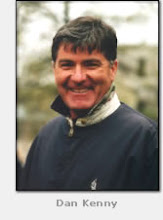
John Franks was the only man to win four Eclipse Awards as leading owner. Dan Kenny
was his primary adviser during that entire period. Their collaboration was the stuff of legend. What we did for him we can do for you. It is not our usual temper to boast so much but it’s a crowded, noisy universe out there. While shameless commerce prevails where sportsmanship once reigned we march on in search of plausible investment in bloodstock. At the minimum, we can save you from the clutches of various nincompoops, petty gangsters, and people with tape measures in their pocket.