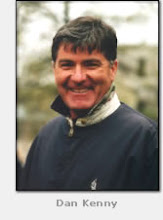
Handicapping skills can be profitable for more than betting races. Some of my most memorable acquisitions in the bloodstock world were a result of simply applying common sense principles. One involved the almighty Storm Cat, a memory freshened by the news this week that he would breed no more.
I had just arrived in Kentucky (from California) back in 1993 in time for the Keeneland November Sale. Several clients had give me orders to buy mares. One NOT on my list was In Neon because I expected her to sell much higher than my modest budget would allow.
Imagine my surprise when stakes-winning In Neon, in foal to Storm Cat, went unsold at $l60,000, well below her reserve price of $200,000. A handful of agents were buzzing around the owner of In Neon, making low-ball bids. She insisted on full price so I sprinted to the pay phones to call my only client who might play at that level.
John Franks was a taskmaster who demanded a rational reason for whatever we did.
Paying a 25% premium over an RNA was not his idea of good business.
“Let me get this straight,” he said. “All the smart and rich players are in the sales pavilion and nobody is willing to pay even $l50,000. Why in heaven should I pay $200,000?”
I had to think fast as more agents hovered around her owner. She might not be on the market very long. You see, In Neon was a hard-hitting stakes-winner who was a Midwest stakes-winner for trainer Jack Van Berg.
In Neon’s first foal Star Recruit was by Al Nasr, a complete failure at stud. Yet Star Recruit won nearly $l million and just missed winning the Santa Anita Handicap. He won all that while racing with a club foot. Bear with me as I digress to tell you that the previous year another client, a Canadian named Peter Redekop told me to buy him the fastest horse in the May sale of 2-year-olds at Barretts. The fastest horse clearly was the colt by Al Nasr-In Neon. But nobody wanted him either and he went unsold at $40,000.
Redekop had changed his mind when informed about the foot.
“You should buy the mare because I had a chance to buy her first foal,” I replied. “And it still bugs me how I let that one get away. If this mare can get a graded stakes winner by Al Nasr, imagine what she might do with Storm Cat.”
“Go ahead and buy her then,” said Franks.
Her Storm Cat foal turned out to be Sharp Cat, winner of seven Grade I races and over $2 million.
I recommended that In Neon go to Theatrical, standing then for $20,000, and the result was another top notcher in Royal Anthem.
The reason that there were no other takers for In Neon, in my opinion, was that she was about as homely looking as a mare could be. I have never doubted that if Franks had been present at Keeneland that he would have passed on her, too.
Peter Redekop and I had another brush with fame and fortune when he sent me to Saratoga to try to find a well-bred filly for a reasonable price.
I gravitated over to a one horse consignment in a distant corner of the sale grounds.
There stood a tiny little filly who represented the entire consignment of Dr. Jacques Levasseur from Quebec. The filly was small but she was the right type to race over the bullring at Exhibition Park in Redekop’s home city of Vancouver.
On a budget of $75,000 I knew it was a longshot to try and buy a Storm Cat filly for that kind of money. I stepped in to try in any event and my heart fluttered when I had the bid at $75,000. I should have been finished but went a couple more bids, confident that my client would not disapprove. We tossed in the towel at $90,000 and trainer Jim Day signed the ticket that evening for Canadian powerhouse Sam-Son Farm.
I consoled my self with the knowledge that the deep pockets Sam-Son operation would have bid what it took to secure the filly they named Silken Cat. Silken Cat won all three of her starts and was named Canada’s champion two-year-old filly.
Four years later, Silken Cat came into my life again. I had been hired by another wealthy Canadian, Eugene Melnyk to scout for the very best yearlings that Keeneland had to offer. He was new to the game and liked to ask Todd Pletcher and I what horses did he “have to have”.
Right from the start I nominated the Gone West colt out of Silken Cat. He wouldn’t be cheap, I observed, but he was the one you had to have.
“Don’t worry,” I recall saying. “You’ll get even by the end of Saratoga.”
Todd was not so sure. The horse had to please him because all the weight of a $2 million yearling would be on his shoulders just as he was beginning his career.
Luckily, I talked him into it and Melnyk had his first Eclipse Award in Speightstown.
As for my prediction, he got even all right, at the end of his SIX year old season. Todd and I crossed paths at Lone Star soon after Speightstown won the Breeders’ Cup Sprint. .He shook my hand and acknowledged that my persistence had enabled him to train a champion. Todd is a class act and richly deserves all the accolades that have come his way in the years since.
A Storm Cat descendant of more recent vintage is Home For Harlan, a 3-year-old by Harlan’s Holiday, who set a new track record at Woodbine. The colt, racing in blinkers for the first time, covered 6 l/2 furlongs in l:l4.8l. He is a great grandson of Storm Cat.
We picked him out of the July Fasig-Tipton Sale for $82,000 from the first crop of his sire on behalf of Jim and Susan Hill of Calgary. The Hills are putting together a well-bred stable in their native land
May 20, 2008
May 16, 2008
Don't Boo a Dead Horse
More jumping to conclusions, a common form of exercise in the world of Thoroughbred horses. Racetrackers have a saying, “Believe none of what you hear and only half of what you see” in order to survive.
Somebody started a rumor the week of the Kentucky Derby that the troubles that beset the sport could be laid at the feet of Native Dancer. The first superstar horse of the television age evidently was found guilty of siring the undefeated Raise A Native who in turn sired the prepotent Mr. Prospector. That Native Dancer also sired the dam of the almighty Northern Dancer was more proof that he had somehow contaminated the breed. Your reporter seemed to support that view.
Descendents of Native Dancer performed wonders on the racetrack and in the breeding shed. Taken together, the male strain via Raise A Native and the female strain through Natalma (dam of Northern Dancer) began to produce a uniquely American runner who could carry their abundant speed l0 furlongs. Danehill and Sadler’s Wells combined to sire 600 stakes-winners world wide and US based Danzig and Mr. Prospector were good for almost 400 more.
If these horses were so successful, why the carping now? Soundness issues say the critics.
As a small breeder myself, I would take my chances with a Northern Dancer/Mr. P stallion rather than patronize lines which have been pummeled by this pair for decades.
What observers often miss is that, in addition to speed and soundness, a stallion needs courage to pass on to his progeny. Courage, often expressed as “heart” can only be detected by observing it in performance. The canny breeder who can recognize a horse like Distorted Humor, who began his career with a $l2,500 fee and now stands for $300,000, may reap huge rewards.
Horses behave much like human athletes. Some have a high pain tolerance while others are finicky and prone to chuck it in when things don’t go their way
Just a few years ago South American breeders began to acquire US stallions to inject more speed into their own stock. Speedballs like Salt Lake, Bernstein, Honour and Glory, and Southern Halo were given an enthusiastic welcome.
Pedigrees have become global, too. A good example is champion Invasor. He is a South American whose American sire (Candy Stripes) raced in France as did his own sire (Blushing Groom) who stood in France before migrating to Kentucky. Red God, the sire of Blushing Groom, was American-bred but raced in France. He was a son of the great Nasrullah who came to American shortly after World War II and sired seven-time champion sire Bold Ruler.
Invasor himself was found in Uruguay and purchased by the Maktoum family of Dubai. Invasor is now at stud in Kentucky.
There is going to be a need eventually for other strains to develop as more popular ones saturate the breed. Dissing Native Dancer and his clans will do nothing to ameliorate the situation, however. How about a shout out for Native Dancer instead!.
Somebody started a rumor the week of the Kentucky Derby that the troubles that beset the sport could be laid at the feet of Native Dancer. The first superstar horse of the television age evidently was found guilty of siring the undefeated Raise A Native who in turn sired the prepotent Mr. Prospector. That Native Dancer also sired the dam of the almighty Northern Dancer was more proof that he had somehow contaminated the breed. Your reporter seemed to support that view.
Descendents of Native Dancer performed wonders on the racetrack and in the breeding shed. Taken together, the male strain via Raise A Native and the female strain through Natalma (dam of Northern Dancer) began to produce a uniquely American runner who could carry their abundant speed l0 furlongs. Danehill and Sadler’s Wells combined to sire 600 stakes-winners world wide and US based Danzig and Mr. Prospector were good for almost 400 more.
If these horses were so successful, why the carping now? Soundness issues say the critics.
As a small breeder myself, I would take my chances with a Northern Dancer/Mr. P stallion rather than patronize lines which have been pummeled by this pair for decades.
What observers often miss is that, in addition to speed and soundness, a stallion needs courage to pass on to his progeny. Courage, often expressed as “heart” can only be detected by observing it in performance. The canny breeder who can recognize a horse like Distorted Humor, who began his career with a $l2,500 fee and now stands for $300,000, may reap huge rewards.
Horses behave much like human athletes. Some have a high pain tolerance while others are finicky and prone to chuck it in when things don’t go their way
Just a few years ago South American breeders began to acquire US stallions to inject more speed into their own stock. Speedballs like Salt Lake, Bernstein, Honour and Glory, and Southern Halo were given an enthusiastic welcome.
Pedigrees have become global, too. A good example is champion Invasor. He is a South American whose American sire (Candy Stripes) raced in France as did his own sire (Blushing Groom) who stood in France before migrating to Kentucky. Red God, the sire of Blushing Groom, was American-bred but raced in France. He was a son of the great Nasrullah who came to American shortly after World War II and sired seven-time champion sire Bold Ruler.
Invasor himself was found in Uruguay and purchased by the Maktoum family of Dubai. Invasor is now at stud in Kentucky.
There is going to be a need eventually for other strains to develop as more popular ones saturate the breed. Dissing Native Dancer and his clans will do nothing to ameliorate the situation, however. How about a shout out for Native Dancer instead!.


May 12, 2008
Jumping to Conclusions
Jumping to conclusions is often the only exercise we get in the horse business. Never more so than the present debate, if you could call it that, about the demise of Eight Belles in her moment of glory in the Kentucky Derby.
That dreadful reality hit hard among those of us in the Thoroughbred world, a gutshot for which none of us could prepare. Tears flowed, fingers pointed and a pronounced numbness against the sorrow left us to grieve in the aftermath.
The event also unleashed a barrage of emotion that rarely mingled with fact while a stunned public tried to make sense of it all. Even before the Derby some once-a-year commentators placed the blame on Native Dancer for the woes of the breed. He was faulted for siring Raise A Native who sired Mr. Prospector. That hardly constitutes a felony but you know how radicals think... "Don’t trust a stallion over 30”.
A young lady on National Public Radio got in the act by telling her audience that Northern Dancer was the culprit for bringing a gene for unsoundness into the breeding shed. Which “gene” she did not say.
Thus the quest for new urban myths to espouse got the drop on the Thoroughbred hierarchy’s response time. By the time the usual suspects and the usual committees were rounded up it was left to the likes of PETA to set the agenda.
Too late for racing to borrow the modernist’s apology template of deny it, lie about it, and say that’s it time to move on. So now what do we do? And don’t anyone dare suggest giving $2 million to Rudy Giuliani to try to fix it.
Let’s try to calmly identify the things that we can amend first. Continue research on synthetic tracks. Modify the use of the whip. Increase pre-race soundness inspections at major races.
The majority of horses racing are claimers and year-round racing economics doom them to race non-stop. Why not change the rules in favor of the owners and trainers who wish to give their horses periodic time outs? I suggest a dua- entry claiming race whereby a horse who has been turned out at least 60 days is allowed two runs in claiming races with a waiver that prevents him from being snatched up by another owner. Perhaps he should run for a reduced purse, say 80 % of the total.
And isn’t it time to put to rest, once and for all, of the canard that 2-year-old racing is responsible for breaking down immature animals? That idea is usually followed by a plea to ban juvenile racing. The fact is that young horses need that activity for develop sufficient bone to compete later on. In short, if you do not race at two, chances are you will have a maiden with bucked shins at ages three and up.
There might be a way to mollify proponents and opponents of 2-year-old racing. Tracks might cut juvenile purses in half and take that money and supplement maiden races for older horses. An owner bent on running early gets to do so, albeit for less money, and those with patience and a wish to protect their animal are handsomely rewarded.
Chief merit of simple ideas like these are that they require no regulation, only the agreement of individual tracks and the horse owners who race there.
Another thing we can do is stop worrying about PETA and its ilk. You could have fit all their demonstrators in a station wagon last week in Lexington. Do they have such political power that we need fear their wrath? Doubtful. They’ve been trying for 40 years to get Canadians to stop harvesting baby seals, with no success. They badger fur wearers and meat eaters, but have you noticed any progress in those areas?
The Eight Belles tragedy was predictably conjoined with that of Barbaro two years earlier. Numerous pundits both inside and outside the Thoroughbred industry decried the public loss of these two great horses and suggested that they were evidence of defects in the breed.
Maybe. But these things are hard to prove. Statistics experts often encounter anomalys that seem to suggest a trend in certain areas, i.e., childhood cancer rates in a neighborhood near an electrical power plant. What seems a clear cut case of cause and effect sometimes is seen years later as a statistical coincidence.
And so it is with Barbaro and Eight Belles.
A more positive example is the Triple Crown cluster of l973-78 produced by Secretariat, Seattle Slew, and Affirmed. I recall that serious racing people at the time who wondered if the Triple Crown had gotten too easy. Thirty years down the road we recognize that period as a “cluster”.
Agricultural land prices surely affect the breed, forcing small and mid-sized farms to overstock their paddocks as an economic necessity. Not much we can do about that.
It’s often tempting to vilify track management when such things go wrong. But if you think running a track is any picnic in the face of 24-hour a day casino competition then you have another thing coming.
Casinos are mentioned to remind Kentucky voters of the pathetic handling of their plea to vote on the issue of gaming at racetracks. Research and development costs plenty of money in the horse world to make the sport safer. The legislature responded with outright disdain to any proposals made by the horse industry. An industry which is best suited to drive the economic engine and produce much needed revenue for all of Kentucky citizens.
That dreadful reality hit hard among those of us in the Thoroughbred world, a gutshot for which none of us could prepare. Tears flowed, fingers pointed and a pronounced numbness against the sorrow left us to grieve in the aftermath.
The event also unleashed a barrage of emotion that rarely mingled with fact while a stunned public tried to make sense of it all. Even before the Derby some once-a-year commentators placed the blame on Native Dancer for the woes of the breed. He was faulted for siring Raise A Native who sired Mr. Prospector. That hardly constitutes a felony but you know how radicals think... "Don’t trust a stallion over 30”.
A young lady on National Public Radio got in the act by telling her audience that Northern Dancer was the culprit for bringing a gene for unsoundness into the breeding shed. Which “gene” she did not say.
Thus the quest for new urban myths to espouse got the drop on the Thoroughbred hierarchy’s response time. By the time the usual suspects and the usual committees were rounded up it was left to the likes of PETA to set the agenda.
Too late for racing to borrow the modernist’s apology template of deny it, lie about it, and say that’s it time to move on. So now what do we do? And don’t anyone dare suggest giving $2 million to Rudy Giuliani to try to fix it.
Let’s try to calmly identify the things that we can amend first. Continue research on synthetic tracks. Modify the use of the whip. Increase pre-race soundness inspections at major races.
The majority of horses racing are claimers and year-round racing economics doom them to race non-stop. Why not change the rules in favor of the owners and trainers who wish to give their horses periodic time outs? I suggest a dua- entry claiming race whereby a horse who has been turned out at least 60 days is allowed two runs in claiming races with a waiver that prevents him from being snatched up by another owner. Perhaps he should run for a reduced purse, say 80 % of the total.
And isn’t it time to put to rest, once and for all, of the canard that 2-year-old racing is responsible for breaking down immature animals? That idea is usually followed by a plea to ban juvenile racing. The fact is that young horses need that activity for develop sufficient bone to compete later on. In short, if you do not race at two, chances are you will have a maiden with bucked shins at ages three and up.
There might be a way to mollify proponents and opponents of 2-year-old racing. Tracks might cut juvenile purses in half and take that money and supplement maiden races for older horses. An owner bent on running early gets to do so, albeit for less money, and those with patience and a wish to protect their animal are handsomely rewarded.
Chief merit of simple ideas like these are that they require no regulation, only the agreement of individual tracks and the horse owners who race there.
Another thing we can do is stop worrying about PETA and its ilk. You could have fit all their demonstrators in a station wagon last week in Lexington. Do they have such political power that we need fear their wrath? Doubtful. They’ve been trying for 40 years to get Canadians to stop harvesting baby seals, with no success. They badger fur wearers and meat eaters, but have you noticed any progress in those areas?
The Eight Belles tragedy was predictably conjoined with that of Barbaro two years earlier. Numerous pundits both inside and outside the Thoroughbred industry decried the public loss of these two great horses and suggested that they were evidence of defects in the breed.
Maybe. But these things are hard to prove. Statistics experts often encounter anomalys that seem to suggest a trend in certain areas, i.e., childhood cancer rates in a neighborhood near an electrical power plant. What seems a clear cut case of cause and effect sometimes is seen years later as a statistical coincidence.
And so it is with Barbaro and Eight Belles.
A more positive example is the Triple Crown cluster of l973-78 produced by Secretariat, Seattle Slew, and Affirmed. I recall that serious racing people at the time who wondered if the Triple Crown had gotten too easy. Thirty years down the road we recognize that period as a “cluster”.
Agricultural land prices surely affect the breed, forcing small and mid-sized farms to overstock their paddocks as an economic necessity. Not much we can do about that.
It’s often tempting to vilify track management when such things go wrong. But if you think running a track is any picnic in the face of 24-hour a day casino competition then you have another thing coming.
Casinos are mentioned to remind Kentucky voters of the pathetic handling of their plea to vote on the issue of gaming at racetracks. Research and development costs plenty of money in the horse world to make the sport safer. The legislature responded with outright disdain to any proposals made by the horse industry. An industry which is best suited to drive the economic engine and produce much needed revenue for all of Kentucky citizens.
Dec 12, 2007
RAYONA, RAYONA…HOW DO YOU WIN SO MANY?
Rayona won her fifth race of the year on the weekend at Turfway. She’s the first foal out of Zienat, a Woodman mare I bought privately for J. C. Davis of Henderson, KY. Zienat was a $260,000 yearling so you can imagine how good looking she is.
I bought her for $7000 after she failed to bring a reserve amount. Her second foal for Davis is Rayona who boosted her earnings to $93,000.
You can always find these heavily discounted opportunities if you are attuned to the race track and pay attention to broodmare trends. You didn’t have to be Tesio to invest in the idea of Woodman turning out good broodmares.
Most of my readers are too busy doing other things to notice the subtle ways of the marketplace. That’s why you need me to do the shopping!
I bought her for $7000 after she failed to bring a reserve amount. Her second foal for Davis is Rayona who boosted her earnings to $93,000.
You can always find these heavily discounted opportunities if you are attuned to the race track and pay attention to broodmare trends. You didn’t have to be Tesio to invest in the idea of Woodman turning out good broodmares.
Most of my readers are too busy doing other things to notice the subtle ways of the marketplace. That’s why you need me to do the shopping!
Dec 8, 2007
MORE TERRIFIC TWOS
Christmas Ship finished second today in the Corte Madera stakes at Golden Gate. She was purchased by Dan Kenny Bloodstock for $95,000 at OBS on behalf of trainer Jerry Hollendorfer. The daughter of Montbrook-Show Your Pride is a half-sister to Trickey Trevor, a graded stakes-winner of some $700,000. Trickey Trevor (Demaloot Demashoot) was also bought at OBS from Ocala Stud for $52,000.
Our return on investment on purchased 2-year-olds continues to be impressive. We can do the same for you.
Our return on investment on purchased 2-year-olds continues to be impressive. We can do the same for you.
Dec 3, 2007
MORE GOOD DEALS
November Sale at Keeneland was so overheated that it may have been prudent to park your money on the sidelines and concentrate on the upcoming January Sale. Another reason to adopt this tactic is that it gives you a chance to review my impeccable record of buying broodmares at below-market prices over the past two decades.
Buying a Broodmare of the Year such as In Neon might be seen as a fluke among the legions of knockers that populate the sport. But repeated prime purchases, year after year, takes care of that.
FRANKS A LOT
Dan Kenny Bloodstock had a two-decade long association with the late John Franks, still the only owner to win four Eclipse Awards. In addition to In Neon, we purchased numerous stakes producers on his behalf. It was also my privilege to suggest matings for his hundreds of mares. Franks Farm finished in the top three nationally among breeders nearly every year of our time together. His name still appears on the leader board four years after his death in 2003.
The l993 Keeneland November Sale, my first since relocating from California, proved to be a pivotal event.
We purchased a stakes-winner named Constant Change in foal to Silver Deputy for $20,000. She was a half-sister to Very Subtle who had won the Breeders Cup Sprint over colts. The Silver Deputy foal was named Highfalutin who won nearly $400,000.
Next came Sunny Sara, an Affirmed mare for $32,000. She went on to produce three stakes horses.
Another ace from that sale was Sophisticated Sam, a stakes-winner of over $200,000 who was in foal to freshman sire El Prado, for $42,000. Her in utero foal brought $l35,000 and her next foal, mated at my suggestion with Cure The Blues, earned over $500,000.
Revered was a lovely little mare who had already produced two stakes-winners, including one by failed stallion Desert Wine. We bought Revered for $l00,000 in foal to Halo.
Revered’s yearling at the time turned out to be a $400,000 stakes-winner by Private Account.
We bought her weanling filly by Alysheba for $30,000 and she turned out to be a black-type runner also.
Mountain Fling was an Apalachee mare from a great family and we snagged a bargain at $l2,000. She went on to produce a couple of stakes-winners.
Premiere Express, a stakes runner by home stallion Premiership-a recommended mating-was bought in foal to El Prado for $40,000 and produced a stakes-winner.
At the time I also suggested that he buy out a partner on the Seattle Slew filly Slewzig for peanuts ($30,000 for half). Slewzig later produced three stakes-horses.
A pretty good week’s work.
O CANADA!
James Redekop of Vancouver called one day and asked me to buy him a mare at Keeneland. I selected Donna Roberta who had already produced a stakes-winner. She cost $l7,000 in foal to Geiger Counter who became a modest winner. When the mare reached British Columbia I suggested she be bred to local star Son of Briarctic. The resultant foal, named Ryson, won nearly $400,000.
Ten years or so lataer, Redekop rang again. Donna Roberta was by now a little long in the tooth and we were to find a suitable replacement. We chose Precious Brenda for $7,000, in foal to Minardi. Her then three-year-old turned out to be Austin’s Mom, who won the Grade III Correction Handicap at Aqueduct. The Minardi filly sold for $50,000.
Fellow Canadian Norman McAllister showed up in l997 at Keeneland with a somewhat larger bankroll and instructed me to round up about thirty mares. Talk about beginner’s luck! At our first session we latched onto Song of Syria who had a weanling that would grow into champion Chilukki. For $72,000 we had the dam of a champion! Song of Syria’s first foal for McAllister was a gorgeous filly by French Deputy who was sold for $500,000. The mare was bred to Storm Cat and brought $935,000.
That same fateful night we bought Grade I winner Single Blade for $50,000. This mare was, bar none, the most beautiful mare that I have ever seen. We sold foals out of her for good money for a decade thanks to the exploits of her Grade II winner Comeonmom who was a yearling when we bought the mare. She was in foal to Street Cry when she died of colic in 2006.
Another McAllister purchase was stakes-winner McKilts for $30,000. She has out a current stakes-winner by Sultry Song.
ROLLING STONERSIDES
We negotiated the purchase of Grade I winner Tout Charmant on behalf of Bob McNair’s Stonerside Farm. She won the Gr. I Queen Elizabeth at Keeneland and would likely have won the Breeders Cup with a better trip.
Anyhow, the deal involved sweetening of the pot to acquire Tout Charmant by tossing in a mare named Roujoleur as the “player named later”. Roujoleur (Red Ransom) is now dam of Chatain who is a graded stakes winner of $216,330 after winning a stakes in New Jersey in l.08 2/5 for six furlongs.
CLARITY BEGINS AT HOME
We have never been afraid to purchase a good horse with our own nickel. In fact, the best horse I ever owned was Sunny Blossom. I ran up quite a phone bill trying to get established clients to buy him. Finally, I put up my own money and formed a partnership to buy him. All he did was win $600,000 and run 6 furlongs in l.07.l at Santa Anita, a record which still stands l9 years later. By the way, I bought his dam for a pittance days before his first stakes win. Made a bundle.
Same goes for the mare Cherry Moon. I bought the stakes-winning daughter of Quiet American for $65,000 off a ranch in Northern California. I sold her to French agent Eric Puerari for a decent profit. Her first foal, named Cherry Mix, finished second by a head in the Arc de Triomphe. Cherry Mix was sold to Darley and won in Grade I company.
Down in Ocala I purchased a Franks Farm castoff named Nats My Gal who later foaled the good stakes-winner Gold For My Gal, by Franks’ home stallion Gold Alert. He bought the mare back from me for another nice profit.
Over the years I have owned perhaps 200 mares of my own. Ironically, it was another fellow reneging on a deal that turned up roses for me. I had agreed on behalf of a Louisiana horseman to purchase a group of l5 mares from Verne Winchell. At the time I was a house guest of an old school pal named Ted Campbell, a Lexington lawyer.
When he heard about my predicament he promptly agreed to have his bank loan me a six-figure sum. The late l970s market was on fire for mares and I resold the package for double what I paid in about 90 days.
TERRIFIC TWOS
I spent many years at the racetrack because that’s where the action is. Betting is more than a pastime with me and I later discovered that is the source of my success in dealing in bloodstick.
Two-year-old sales have been very good to me. Having been a clocker, I knew from experience what a good workout is supposed to look like. Two horses with similar training times will not always match up as racing prospects months and years down the road.
In the old days of the Hollywood Park sale, then one of the world’s top sales for juveniles, I would fly down from my Vancouver home to clock the stock some two weeks ahead of the sale. There’d be maybe one or two other people doing the same. There were no electronic teletimers available then. One survived by keeping his own counsel about what had been reported by duplicitous consigners in cahoots with official clockers.
My information was for sale and my initial patron was Vancouver homebuilder Peter Redekop. We hit right away with Sharp Hoofer and Pirate’s Quill winning stakes.
Peter has stayed loyal over the years and we have both prospered by the association.
Stakes-winners bought as two- year-olds for him are Above The Table, Act Smart, Ask For Speed, Ali’s Dancer, All The Roses, Alpine Queen, Shezashiningstar, Lady’s Excuse, As The Bell Tolls.
There were many juvenile sale graduates bought by Dan Kenny Bloodstock for a variety of clients. These include Bishop Court Hill (Gr. 1) Sam Lord’s Castle, Tricky Trevor, Riverbank Kid, Viana Ossiana, Blacksage Alley, Mapp Hill, Porey Spring, Sweet Ilima, It Is, Kirtons, Kendall Point, Miss Bank Robin, Lost At Sea.
Buying a Broodmare of the Year such as In Neon might be seen as a fluke among the legions of knockers that populate the sport. But repeated prime purchases, year after year, takes care of that.
FRANKS A LOT
Dan Kenny Bloodstock had a two-decade long association with the late John Franks, still the only owner to win four Eclipse Awards. In addition to In Neon, we purchased numerous stakes producers on his behalf. It was also my privilege to suggest matings for his hundreds of mares. Franks Farm finished in the top three nationally among breeders nearly every year of our time together. His name still appears on the leader board four years after his death in 2003.
The l993 Keeneland November Sale, my first since relocating from California, proved to be a pivotal event.
We purchased a stakes-winner named Constant Change in foal to Silver Deputy for $20,000. She was a half-sister to Very Subtle who had won the Breeders Cup Sprint over colts. The Silver Deputy foal was named Highfalutin who won nearly $400,000.
Next came Sunny Sara, an Affirmed mare for $32,000. She went on to produce three stakes horses.
Another ace from that sale was Sophisticated Sam, a stakes-winner of over $200,000 who was in foal to freshman sire El Prado, for $42,000. Her in utero foal brought $l35,000 and her next foal, mated at my suggestion with Cure The Blues, earned over $500,000.
Revered was a lovely little mare who had already produced two stakes-winners, including one by failed stallion Desert Wine. We bought Revered for $l00,000 in foal to Halo.
Revered’s yearling at the time turned out to be a $400,000 stakes-winner by Private Account.
We bought her weanling filly by Alysheba for $30,000 and she turned out to be a black-type runner also.
Mountain Fling was an Apalachee mare from a great family and we snagged a bargain at $l2,000. She went on to produce a couple of stakes-winners.
Premiere Express, a stakes runner by home stallion Premiership-a recommended mating-was bought in foal to El Prado for $40,000 and produced a stakes-winner.
At the time I also suggested that he buy out a partner on the Seattle Slew filly Slewzig for peanuts ($30,000 for half). Slewzig later produced three stakes-horses.
A pretty good week’s work.
O CANADA!
James Redekop of Vancouver called one day and asked me to buy him a mare at Keeneland. I selected Donna Roberta who had already produced a stakes-winner. She cost $l7,000 in foal to Geiger Counter who became a modest winner. When the mare reached British Columbia I suggested she be bred to local star Son of Briarctic. The resultant foal, named Ryson, won nearly $400,000.
Ten years or so lataer, Redekop rang again. Donna Roberta was by now a little long in the tooth and we were to find a suitable replacement. We chose Precious Brenda for $7,000, in foal to Minardi. Her then three-year-old turned out to be Austin’s Mom, who won the Grade III Correction Handicap at Aqueduct. The Minardi filly sold for $50,000.
Fellow Canadian Norman McAllister showed up in l997 at Keeneland with a somewhat larger bankroll and instructed me to round up about thirty mares. Talk about beginner’s luck! At our first session we latched onto Song of Syria who had a weanling that would grow into champion Chilukki. For $72,000 we had the dam of a champion! Song of Syria’s first foal for McAllister was a gorgeous filly by French Deputy who was sold for $500,000. The mare was bred to Storm Cat and brought $935,000.
That same fateful night we bought Grade I winner Single Blade for $50,000. This mare was, bar none, the most beautiful mare that I have ever seen. We sold foals out of her for good money for a decade thanks to the exploits of her Grade II winner Comeonmom who was a yearling when we bought the mare. She was in foal to Street Cry when she died of colic in 2006.
Another McAllister purchase was stakes-winner McKilts for $30,000. She has out a current stakes-winner by Sultry Song.
ROLLING STONERSIDES
We negotiated the purchase of Grade I winner Tout Charmant on behalf of Bob McNair’s Stonerside Farm. She won the Gr. I Queen Elizabeth at Keeneland and would likely have won the Breeders Cup with a better trip.
Anyhow, the deal involved sweetening of the pot to acquire Tout Charmant by tossing in a mare named Roujoleur as the “player named later”. Roujoleur (Red Ransom) is now dam of Chatain who is a graded stakes winner of $216,330 after winning a stakes in New Jersey in l.08 2/5 for six furlongs.
CLARITY BEGINS AT HOME
We have never been afraid to purchase a good horse with our own nickel. In fact, the best horse I ever owned was Sunny Blossom. I ran up quite a phone bill trying to get established clients to buy him. Finally, I put up my own money and formed a partnership to buy him. All he did was win $600,000 and run 6 furlongs in l.07.l at Santa Anita, a record which still stands l9 years later. By the way, I bought his dam for a pittance days before his first stakes win. Made a bundle.
Same goes for the mare Cherry Moon. I bought the stakes-winning daughter of Quiet American for $65,000 off a ranch in Northern California. I sold her to French agent Eric Puerari for a decent profit. Her first foal, named Cherry Mix, finished second by a head in the Arc de Triomphe. Cherry Mix was sold to Darley and won in Grade I company.
Down in Ocala I purchased a Franks Farm castoff named Nats My Gal who later foaled the good stakes-winner Gold For My Gal, by Franks’ home stallion Gold Alert. He bought the mare back from me for another nice profit.
Over the years I have owned perhaps 200 mares of my own. Ironically, it was another fellow reneging on a deal that turned up roses for me. I had agreed on behalf of a Louisiana horseman to purchase a group of l5 mares from Verne Winchell. At the time I was a house guest of an old school pal named Ted Campbell, a Lexington lawyer.
When he heard about my predicament he promptly agreed to have his bank loan me a six-figure sum. The late l970s market was on fire for mares and I resold the package for double what I paid in about 90 days.
TERRIFIC TWOS
I spent many years at the racetrack because that’s where the action is. Betting is more than a pastime with me and I later discovered that is the source of my success in dealing in bloodstick.
Two-year-old sales have been very good to me. Having been a clocker, I knew from experience what a good workout is supposed to look like. Two horses with similar training times will not always match up as racing prospects months and years down the road.
In the old days of the Hollywood Park sale, then one of the world’s top sales for juveniles, I would fly down from my Vancouver home to clock the stock some two weeks ahead of the sale. There’d be maybe one or two other people doing the same. There were no electronic teletimers available then. One survived by keeping his own counsel about what had been reported by duplicitous consigners in cahoots with official clockers.
My information was for sale and my initial patron was Vancouver homebuilder Peter Redekop. We hit right away with Sharp Hoofer and Pirate’s Quill winning stakes.
Peter has stayed loyal over the years and we have both prospered by the association.
Stakes-winners bought as two- year-olds for him are Above The Table, Act Smart, Ask For Speed, Ali’s Dancer, All The Roses, Alpine Queen, Shezashiningstar, Lady’s Excuse, As The Bell Tolls.
There were many juvenile sale graduates bought by Dan Kenny Bloodstock for a variety of clients. These include Bishop Court Hill (Gr. 1) Sam Lord’s Castle, Tricky Trevor, Riverbank Kid, Viana Ossiana, Blacksage Alley, Mapp Hill, Porey Spring, Sweet Ilima, It Is, Kirtons, Kendall Point, Miss Bank Robin, Lost At Sea.
Nov 27, 2007
January Keeneland Sale
Welcome back. We were otherwise detained for l7 consecutive days at Keeneland November Sale. Some well-deserved downtime followed. Now it’s time to get ready for more of the same six weeks hence.
Four Star Sales best lick in November actually came at Fasig-Tipton when Donation fetched $975,000 in foal to the unstoppable Distorted Humor. She is the dam of the highly accomplished Lawyer Ron.
Our thanks to owner Bob Trussell for entrusting Four Star with this exceptional mare.
Watch this space for further January Sale commentary in days ahead.
Four Star Sales best lick in November actually came at Fasig-Tipton when Donation fetched $975,000 in foal to the unstoppable Distorted Humor. She is the dam of the highly accomplished Lawyer Ron.
Our thanks to owner Bob Trussell for entrusting Four Star with this exceptional mare.
Watch this space for further January Sale commentary in days ahead.
Nov 2, 2007
Leapin’ Lou Messina
Our title is handed down courtesy of Leapin’ Lou Messina, a New Orleans boxing promoter in the l960s. He got his nickname, it was said, when he leaped into the ring to stop a fight in which his guy was getting roughed up. His other dubious passion was betting on short priced horses. Lou was a certified bridge jumper who loved to bet thousands to show on perceived good things. Minimum payout in those days was $2.20 to show so a guy could grab a quick l0% for his trouble.
One stormy afternoon Lou raced up in his white Cadillac, leaving the motor running while he dashed in to make his only play of the day. I remember that it was raining hard all day but that didn’t stop our man from laying it down on a horse owned by T. Alie Grissom and ridden by David Whited who was miles on top of the jockey standings at the Fair Grounds.
Whited quickly opened up a daylight lead in the six furlong race and opened up around the turn to lead by five coming to the eighth pole. His mount began to come unglued at that point but bravely battled on with only three sound legs. He figured to hang on for third but the pain was too much and he lost a head bob for show.
Turning to me in the Fair Grounds press box he said, “Kid, this is a hard way to make an easy living”.
One stormy afternoon Lou raced up in his white Cadillac, leaving the motor running while he dashed in to make his only play of the day. I remember that it was raining hard all day but that didn’t stop our man from laying it down on a horse owned by T. Alie Grissom and ridden by David Whited who was miles on top of the jockey standings at the Fair Grounds.
Whited quickly opened up a daylight lead in the six furlong race and opened up around the turn to lead by five coming to the eighth pole. His mount began to come unglued at that point but bravely battled on with only three sound legs. He figured to hang on for third but the pain was too much and he lost a head bob for show.
Turning to me in the Fair Grounds press box he said, “Kid, this is a hard way to make an easy living”.
Subscribe to:
Posts (Atom)